
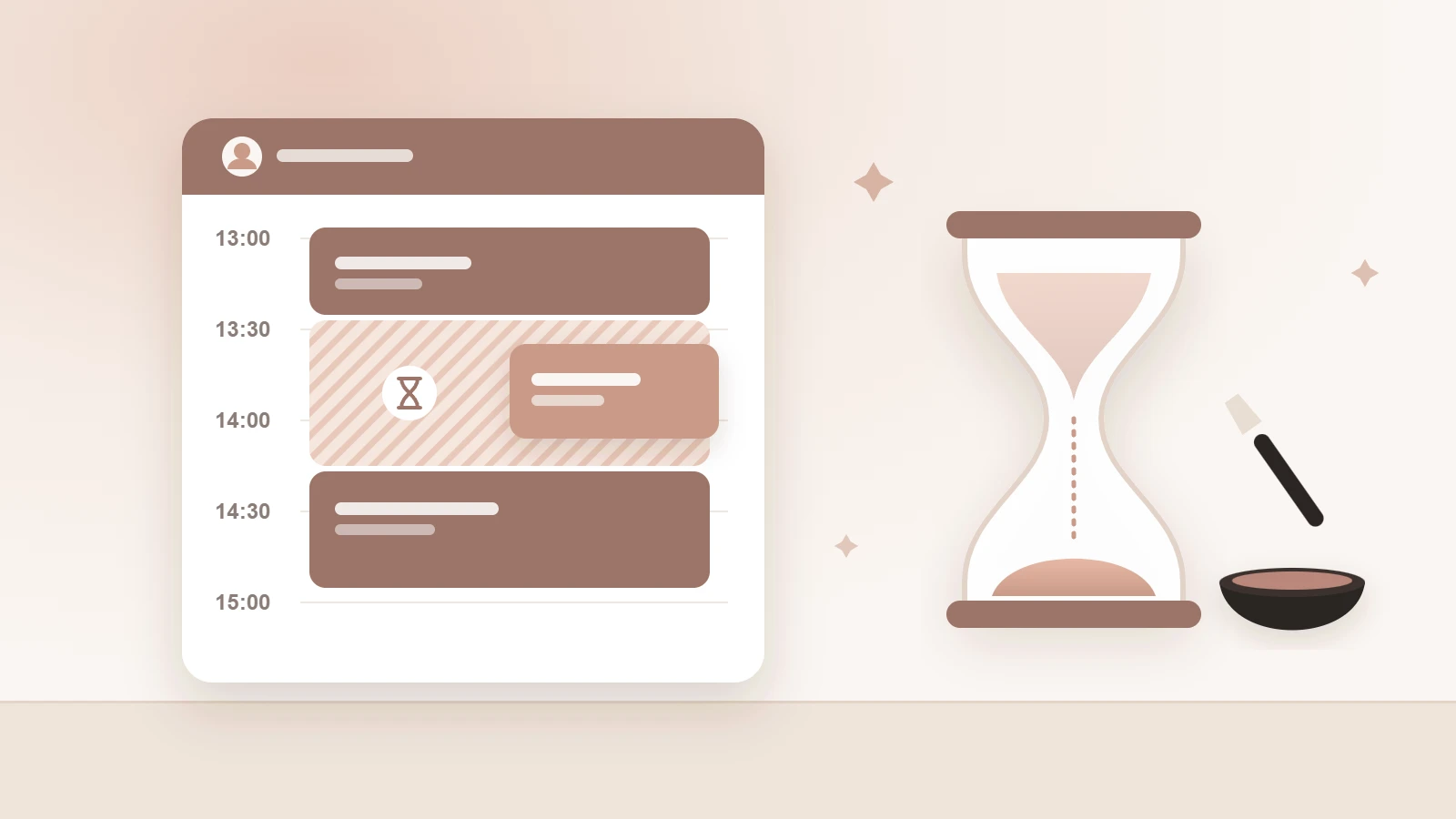
Processing time: how to fit more clients into your day without rushing
It’s half past one. The colour is on, the timer is set for thirty-five minutes. And then? Your stylist folds towels, tidies the trolley or checks her phone. Meanwhile someone calls for a quick fringe trim, and the answer is: sorry, we’re fully booked.
That’s a shame. Because those thirty-five minutes do exist, they’re just hidden in your agenda. In this article you’ll see how to make processing time visible and use it well, without it ever feeling hectic or rushed.
What exactly is processing time?
Processing time is the part of a treatment where the product does the work: colour, highlights, a perm, a keratin treatment, a lash lift or a brow tint. The client stays in the chair, but your staff member’s hands are free.
So a two-hour colour treatment really has three parts: application, processing and finishing (rinsing, cutting, blow-drying). Only the first and last part truly need your staff member.
Why processing time disappears in most agendas
In many salon agendas a colour treatment is one block: two hours busy. That’s easy to read, but it costs you in two ways. Either you don’t sell the free time during processing, or you squeeze someone in “quickly” in the margin, with the risk of double bookings and stress.
And when clients book online, they don’t see that time at all. As far as the website knows, your stylist is simply busy for two hours.
5 tips to make the most of processing time
1. Split the treatment into three parts. For each treatment, record how long the application takes, how long the processing and how long the finishing. Then you know exactly which part of the time is free.
2. Plan short treatments in the gap. A men’s cut, a fringe trim, brow shaping or a short consultation: treatments of 15 to 30 minutes fit perfectly into processing time.
3. Keep a small buffer. Products don’t always work to the minute, and a client sometimes has a question. Leave 5 to 10 minutes, so the next client doesn’t have to wait.
4. Let the agenda do the puzzling. Keeping track in your head of who is free when works on a quiet Tuesday, but not on a busy Saturday. An agenda that knows processing time only shows times that truly fit, online bookings included.
5. Tell your client. Most clients don’t mind if your stylist briefly helps someone else, as long as they know. A cup of coffee, a magazine and “I’ll be right back with you” make all the difference.
Processing time isn’t waiting time. It’s working time that just hasn’t been planned yet.
What does it bring you?
Do the maths. Three colour treatments a day, each with half an hour of processing time, add up to an hour and a half. That’s room for two or three short treatments every day, without staying open longer or hiring extra staff. Over a week or a month that’s a real difference, and your clients only notice that you have space more often.
How ChairIt handles processing time
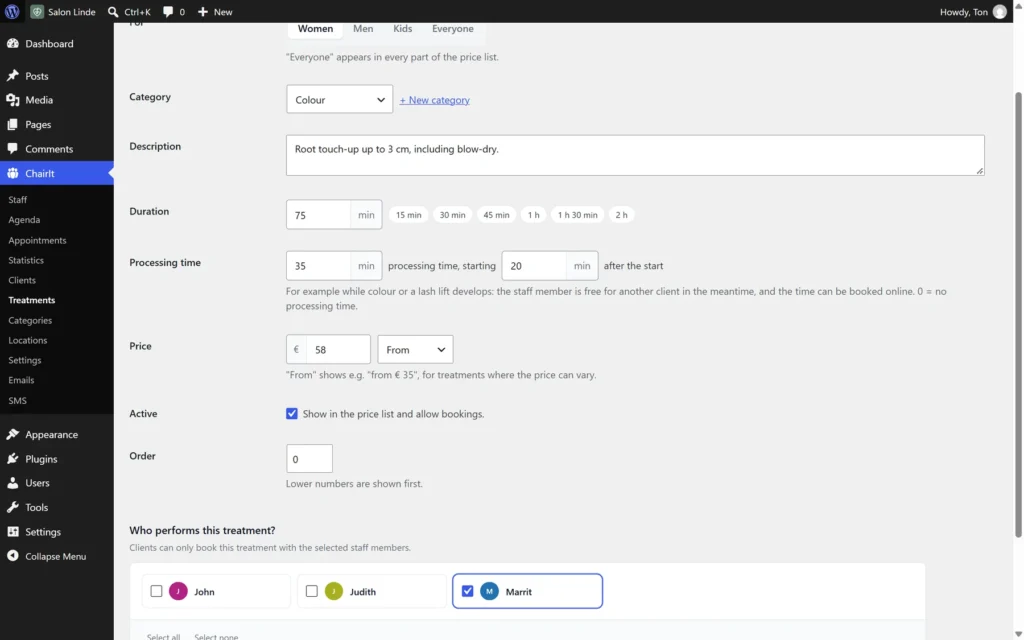
In ChairIt you set a processing time for each treatment. During that time your staff member shows as free in the agenda, and ChairIt offers that time online for a treatment that fits. Clients can also book several treatments in one appointment, such as a cut and colour. ChairIt plans them back to back with the same staff member and adds up the time and price.
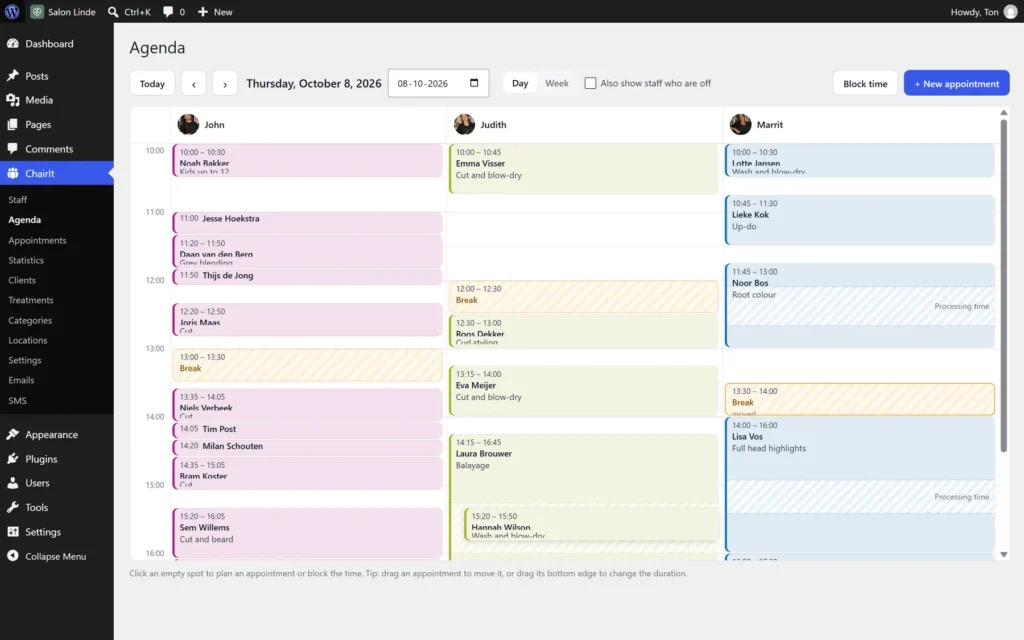
The team agenda shows all your staff side by side, with processing time clearly marked. You see at a glance where there’s still room for a walk-in or a phone booking. And the best part: all of this is in the free version.
ChairIt is a WordPress plugin, so you need your own WordPress website. You install ChairIt there for free via the Plugins menu.
Start with your busiest treatment
You don’t have to change everything at once. Pick the treatment with the longest processing time, usually colour, and for one week deliberately plan a short treatment into it. You’ll be surprised how much extra room there is in your agenda.